
Learning Skills Guide: How to Learn Faster and Study Smarter
This learning skills guide explains how to learn faster and study smarter using proven learning techniques, effective study skills, and science-based methods for long-term success.
GUIDES
LearningSkillsLab editorial team,
1/3/20262 min read
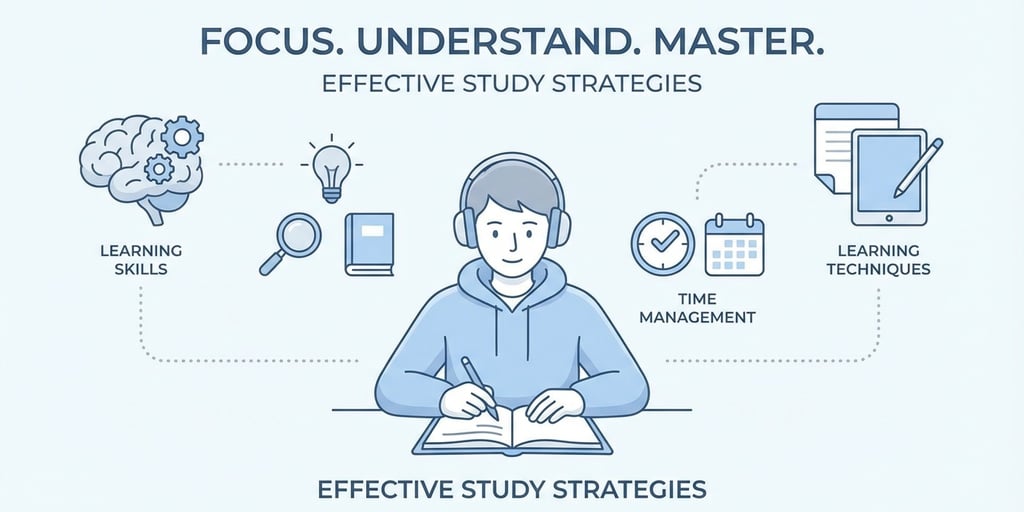
Learning Skills Guide: How to Learn Faster and Study Smarter
Learning is not about spending more time — it’s about using the right learning skills.
This complete guide will help you understand how learning works, apply effective learning techniques, and build strong study skills that improve focus, retention, and long-term results.
What Are Learning Skills?
Learning skills are the abilities that determine how effectively you:
Understand new information
Retain knowledge over time
Apply what you’ve learned in real situations
They include skills such as focus, memory, critical thinking, time management, and self-directed learning.
The good news: learning skills are trainable.
Why Learning Skills Matter More Than Talent
Many learners believe success depends on intelligence or talent.
In reality, how you learn matters more than what you know.
Strong learning skills help you:
Learn faster with less frustration
Reduce forgetting and relearning
Adapt to new subjects or careers
Succeed in school, work, and online learning
Learning smarter always beats learning harder.
Core Learning Techniques You Need to Know
1. Active Learning
Active learning means engaging with information instead of passively reading or watching.
Examples:
Summarizing in your own words
Teaching concepts to someone else
Answering practice questions
Active learning improves understanding and memory.
2. Spaced Repetition
Instead of cramming, spaced repetition spreads learning over time.
Benefits:
Stronger long-term retention
Less mental fatigue
Better recall under pressure
This technique is essential for building durable knowledge.
3. Retrieval Practice
Testing yourself is one of the most effective learning techniques.
Try:
Flashcards
Writing answers from memory
Practice quizzes
Struggling to recall actually strengthens learning.
Essential Study Skills for Effective Learning
Time Management
Effective study skills start with structure.
Use focused study blocks
Eliminate distractions
Plan learning sessions in advance
Consistency matters more than long sessions.
Focus and Attention
Without focus, learning quality drops.
Improve focus by:
Studying in distraction-free environments
Limiting multitasking
Taking short breaks between sessions
Focus is a skill that improves with practice.
Note-Taking That Works
Good notes are tools, not transcripts.
Effective note-taking:
Highlights key ideas
Uses simple language
Connects concepts together
Avoid copying — aim for understanding.
How to Build Your Personal Learning System
A learning system combines techniques, habits, and structure.
Start by:
Defining clear learning goals
Choosing the right learning techniques
Scheduling regular study sessions
Reviewing and adjusting your approach
Small improvements compound over time.
Learning Skills for Online Learning
Online learning requires extra discipline.
To succeed:
Create a fixed study schedule
Use active learning instead of passive watching
Review lessons regularly
Strong learning skills turn online courses into real progress.
Common Learning Mistakes to Avoid
Rereading without practicing recall
Studying for long hours without breaks
Multitasking while learning
Chasing shortcuts instead of systems
Avoiding these mistakes improves results immediately.
Continue Your Learning Journey
To deepen your skills, explore:
Learning Techniques → /learning-hub/learning-techniques
Study Tips → /learning-hub/study-tips
Productivity & Focus → /learning-hub/productivity-focus
Each section builds on this guide.
Final Thoughts
Learning is a lifelong skill.
By developing strong learning skills, applying effective learning techniques, and practicing smart study skills, you gain the ability to learn anything more efficiently.
This guide is your starting point.
EEAT Author Section
Author & Editorial Policy
This guide is written and reviewed by the LearningSkillsLab editorial team, specializing in learning skills, learning techniques, and evidence-based study strategies informed by learning science and real-world educational experience.
All content is created for educational purposes only and follows Google content quality and AdSense guidelines to ensure accuracy, transparency, and long-term value for learners.